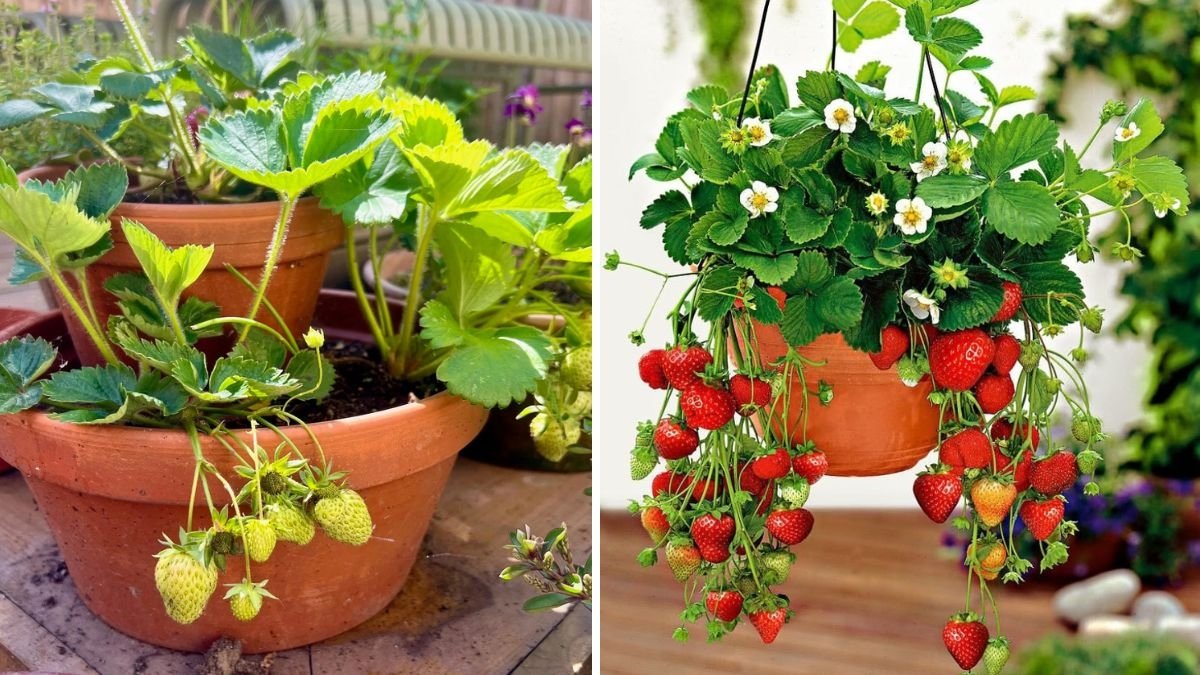
Strawberries are among the sweetest, most delightful fruits you can grow at home. Their bright red color, refreshing flavor, and beautiful leaves make them perfect for gardens, balconies, and even small pots. But many gardeners struggle with slow growth, small fruits, or plants that don’t produce well. The secret is understanding the right planting techniques and care tips that strawberries need to thrive.
This complete 1200-word guide will teach you how to grow strawberries successfully, whether you’re planting them in soil beds, raised beds, hanging baskets, or containers. With the right care, your strawberry plants can produce big, juicy fruits for months—every year!
Understanding Strawberries: Why They Are Easy Yet Sensitive
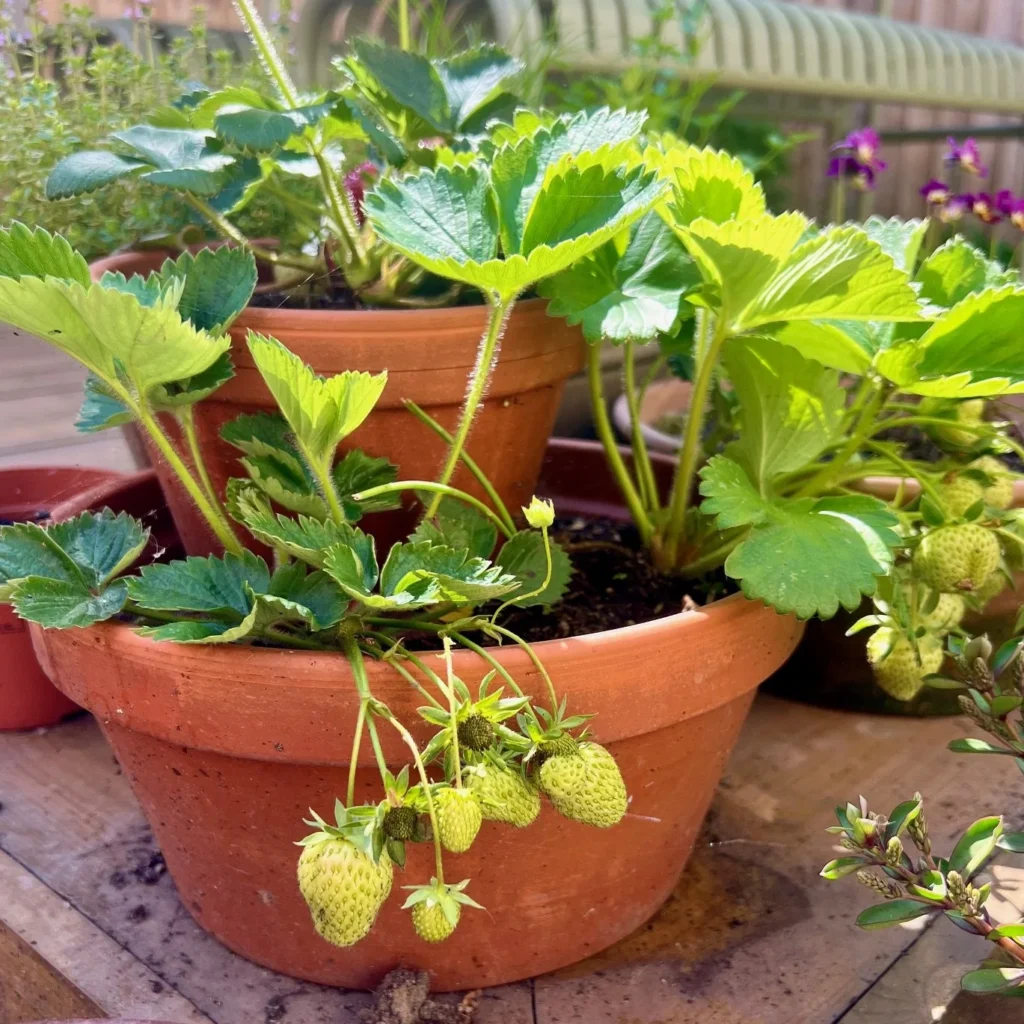
Strawberries are perennial plants, meaning they grow year after year. However, they need the right:
- Soil type
- Sunlight
- Moisture
- Fertilizers
- Winter care
Since strawberries have shallow roots, they are sensitive to water levels and soil quality. But once you create the right environment, they grow fast and yield heavily.
1. Choosing the Right Strawberry Variety
The first step to successful strawberry growing is selecting the right type.
Main Strawberry Types
1. June-bearing varieties
Produce one large harvest in spring or early summer.
Great if you want lots of strawberries at once.
2. Ever-bearing varieties
Produce fruits multiple times a year, usually in spring and fall.
Perfect for backyard gardeners.
3. Day-neutral varieties
Fruit continuously throughout the growing season.
Best for container growers.

For beginners, day-neutral or ever-bearing varieties are the easiest and most productive.
2. Best Time to Plant Strawberries
You can plant strawberries in:
Spring (February–April) — Ideal planting time
Fall (September–November) — Perfect for cooler regions
Early planting helps plants build strong roots and produce more fruits.
3. Best Soil Mix for Strawberry Growth
Strawberries love loose, well-draining, slightly acidic soil.
Perfect Soil Mix
- 40% garden soil
- 30% compost or vermicompost
- 20% cocopeat
- 10% sand
Additional Add-ons:
- A handful of bone meal (for root growth)
- A handful of neem cake (prevents pests)
Ideal Soil pH:
6.0 – 6.5 (slightly acidic)
If your soil is too alkaline, add coffee grounds or pine needle mulch to make it acidic.
4. Planting Strawberries the Right Way

Spacing
- In beds: 12–18 inches apart
- In pots: use 8–10 inch pots per plant
- Hanging baskets: 1–2 plants per basket
Planting Technique
The planting depth is crucial:
- Do not bury the crown (the central growing bud).
- Keep the crown at soil level.
- Only roots should be covered with soil.
Why this matters:
Burying the crown causes rot, while planting too shallow dries out the roots.
5. Provide 6–8 Hours of Sunlight
Strawberries need full sun to produce sweet, high-quality fruits.

Tips:
- Choose the sunniest location
- Avoid planting near walls that block morning sunlight
- If indoors, place near a bright south-facing window
More sunlight = sweeter strawberries.
6. Watering Requirements
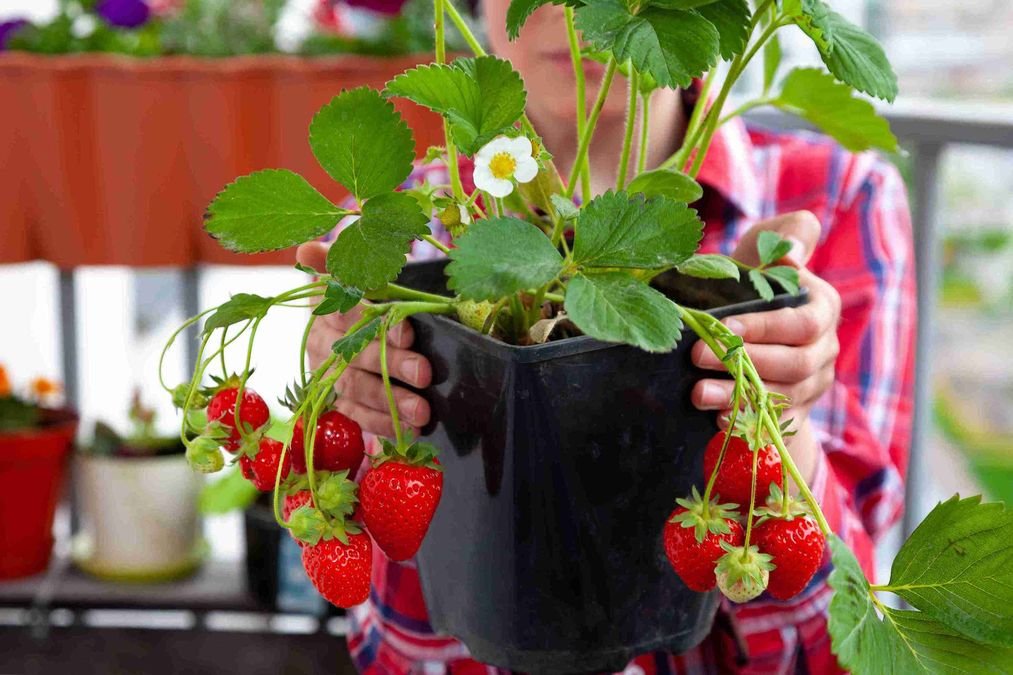
Strawberries have shallow roots and need consistent moisture.
Watering Rule
- Keep soil moist but not soggy
- Water when top 1 inch of soil feels dry
Summer: daily or alternate day watering
Winter: 2–3 times a week
Avoid overhead watering to reduce fungal infections.
Mulching is essential
Use:
- Straw
- Dry leaves
- Coco chips
- Pine needles
Benefits of mulching:
- Prevents soil drying
- Stops fruit from touching soil
- Keeps fruits clean
- Controls weeds
7. Feeding Your Strawberry Plants
Strawberries are heavy feeders and respond well to regular nutrition.
Best Fertilizers for Faster Growth
1. Nitrogen-rich fertilizers (for foliage)
- Vermicompost
- Cow dung compost
Use once every 30 days.
2. Flower and fruit boosters
- Wood ash
- Banana peel fertilizer
- Bone meal
Apply every 45 days.
3. Liquid fertilizers
- Compost tea
- Seaweed extract
- Fish emulsion
Liquid feeds once every 15 days result in faster fruiting.
8. Encouraging More Flowers and Fruits
To get heavy yields, use these expert strategies:

✔ Remove early runners
Strawberries send out runners (baby plants).
In the first season, cut them off so the plant focuses on fruits.
✔ Trim old leaves
Remove yellowing or damaged leaves to improve air circulation.
✔ Use a phosphorus-rich fertilizer
Bone meal → boosts flowering.
Wood ash → improves fruit sweetness.
✔ Keep the plant pest-free
Healthy plants produce more fruits.
9. Pest and Disease Management
Strawberries can attract pests, especially in warm climates.
Common Pests
- Aphids
- Spider mites
- Thrips
- Slugs
- Whiteflies
Organic Pest Control Spray
- 1 liter water
- 1 tsp neem oil
- 1 tsp liquid soap
Spray every 7–10 days.
Fungal Issues (very common)
- Powdery mildew
- Gray mold
Prevention:
- Avoid overhead watering
- Improve air circulation
- Use sulfur powder lightly if needed
10. Training & Supporting Strawberry Plants
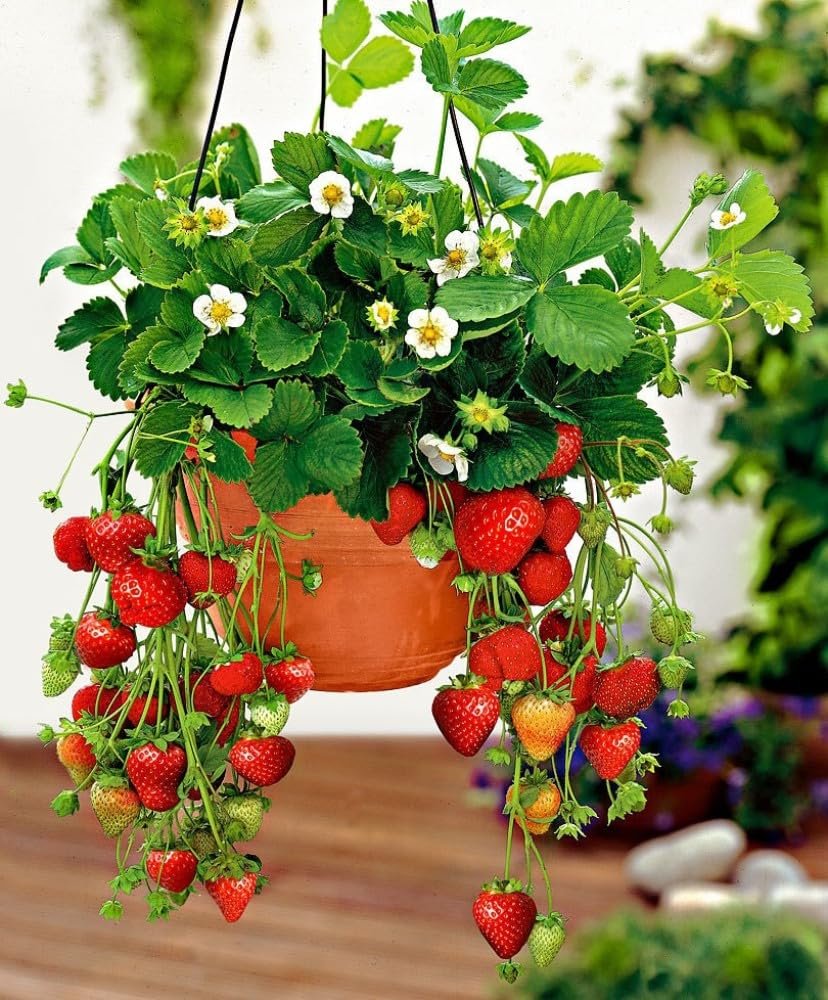
Strawberries grown in pots or hanging baskets tend to droop.
Support your plants by:
- Using a wire frame
- Using hanging baskets with trailing support
- Adding straw mulch so fruits stay clean
Hanging baskets are great for strawberries because they:

- Keep plants pest-free
- Provide good air circulation
- Make fruits hang beautifully
- Reduce soil-borne diseases
11. Harvesting Strawberries the Right Way
When to Harvest?
- Strawberries turn completely red
- Fruits should be slightly soft
- Harvest early morning for best flavor
Do NOT pull the fruit off
Always cut with a small stem attached.
Why?
Pulling can damage the crown and reduce future fruiting.
12. Post-Harvest Care (Very Important)
After fruiting:
- Remove old leaves
- Remove dried stems
- Cut off runners you don’t need
- Give a light organic fertilizer
- Mulch again
This ensures the next round of fruiting is even better.
13. How to Grow Strawberries in Pots or Containers
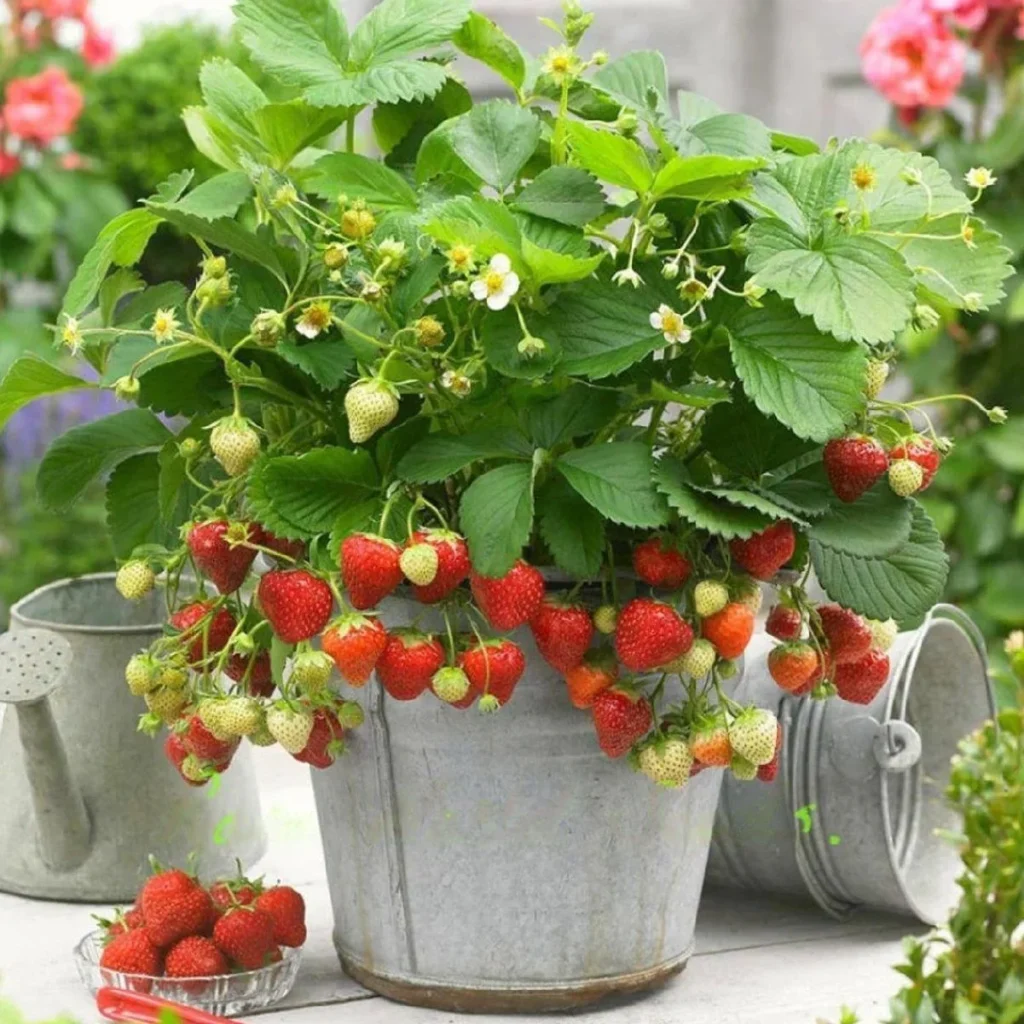
Strawberries grow exceptionally well in containers.
Best Containers:
- 8–10 inch pots
- Grow bags
- Hanging baskets
- Strawberry towers
- Vertical planters
Container Tips:
- Use well-draining soil
- Ensure drainage holes are open
- Don’t let soil dry out completely
Container-grown strawberries may need more frequent feeding.
14. Winter Care for Strawberries
Strawberries love cold weather, but extreme frost can damage plants.
Winter protection:
- Mulch heavily
- Keep soil moist
- Cover plants with shade net or frost cloth during extremely cold nights
Winter is when plants store energy for next season’s fruiting.

15. How Long Do Strawberry Plants Live?
A strawberry plant can live up to 3–5 years, but fruit production decreases after 2–3 years.
Solution:
- Use runners to grow new plants
- Replace old plants with new ones every 3 years
This ensures fresh, healthy, and high-yielding strawberry beds.
Conclusion
Growing strawberries at home is rewarding and surprisingly easy when you follow the correct planting and care tips. With the right variety, soil, sunlight, watering habits, fertilizers, and pest control, your strawberry plants will thrive and produce sweet, juicy fruits for months.
Whether you grow them in pots, raised beds, or hanging baskets, these tips will help you enjoy bigger harvests, healthier plants, and sweeter strawberries right at home.

Leave A Comment