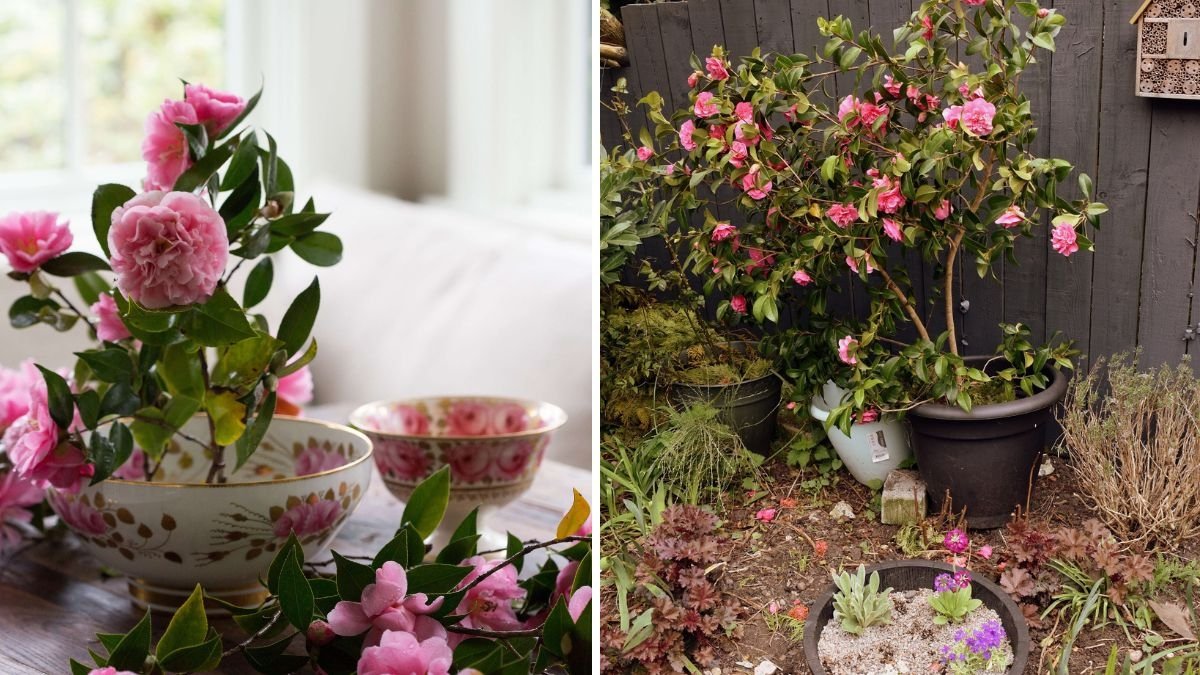
Camellias are among the most elegant flowering shrubs, admired for their glossy evergreen leaves and breathtaking blooms that come in shades of pink, red, white, and even bi-color. Often called the ‘Roses of Winter’, these plants brighten gardens when most other flowers are resting. Whether you’re a beginner gardener or an experienced plant lover, growing camellias is a deeply rewarding experience—if you understand their needs.
In this detailed, 1200-word care guide, you will learn how to grow camellia plants, best soil mix, watering habits, sunlight needs, common problems, and expert tips to boost flowering.
Introduction: Why Camellias Are Garden Favorites
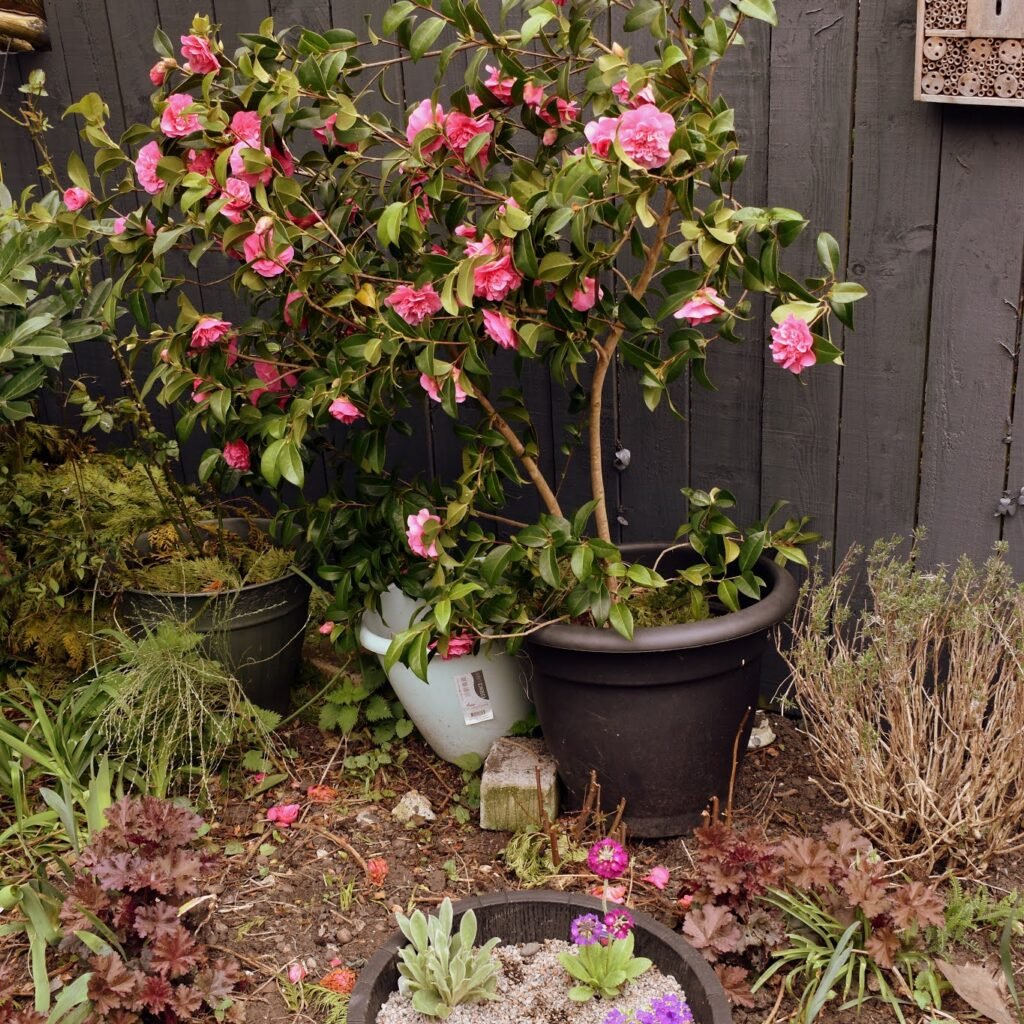
Camellias are native to East and South Asia and belong to the Theaceae family. They are known for:
- Long-lasting blooms
- Stunning evergreen leaves
- Being excellent hedge or ornamental plants
- Thriving in cooler climates
- Blooming during late winter and early spring (depending on variety)
With proper care, a camellia plant can live for decades and become the centerpiece of your garden.
1. Choosing the Right Camellia Variety
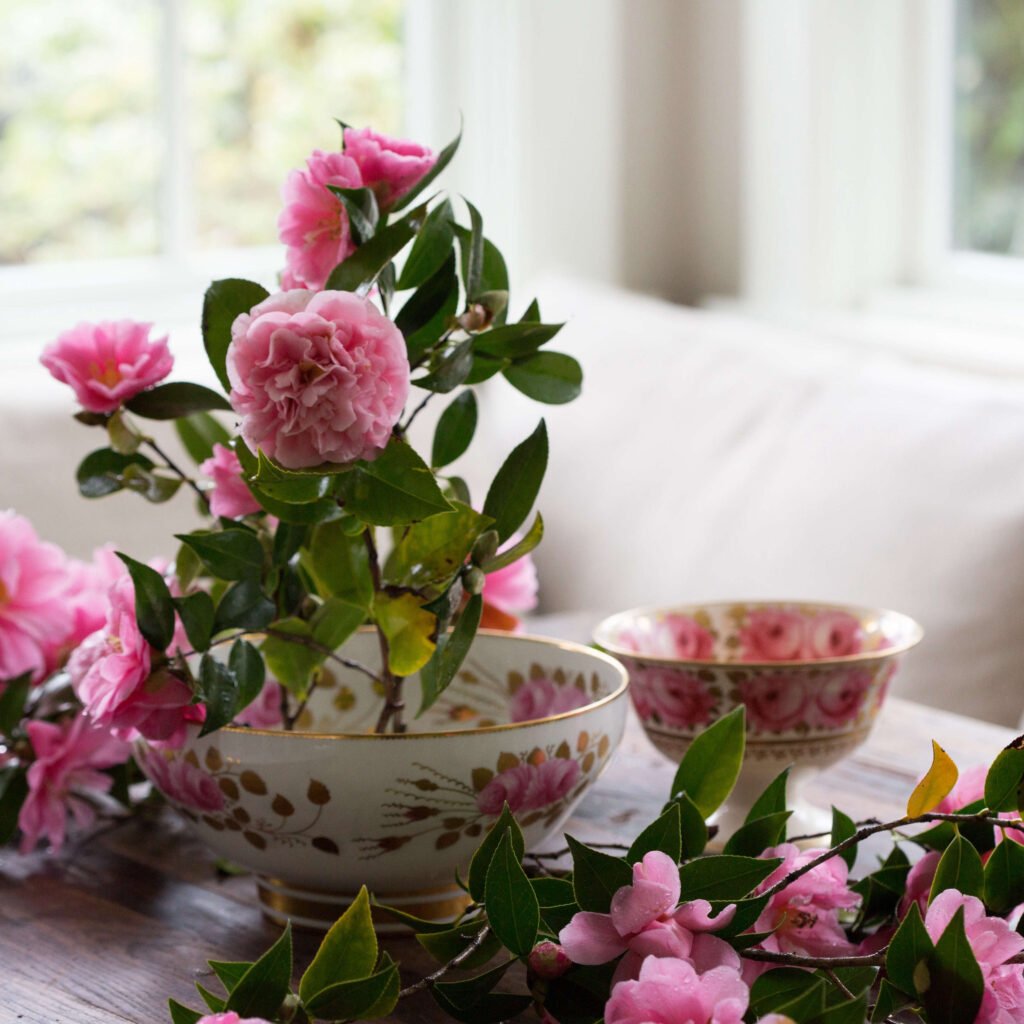
There are more than 250 species and thousands of hybrids, but the two most popular types are:
Camellia japonica
- Larger blooms
- Blooms in late winter to early spring
- Prefers semi-shade
- Best for cooler regions
Camellia sasanqua
- Slightly smaller flowers
- Blooms from autumn to early winter
- Tolerates more sun
- More drought-tolerant
If you live in a warmer climate, choose sasanqua.
If you live in a cooler region, go with japonica.
2. Best Soil for Camellia Growth
Camellias Love acidic soil.
Their ideal soil pH: 5.5 – 6.5

Perfect Soil Mix (Pot or Garden)
You can create an ideal soil mix with:
- 40% Garden Soil
- 30% Cocopeat
- 20% Compost/Vermicompost
- 10% Sand or Perlite
Mix well so the soil becomes loose, airy, and well-draining.
Camellias hate waterlogged or clay-heavy soil, which causes root rot.
3. Sunlight Requirements
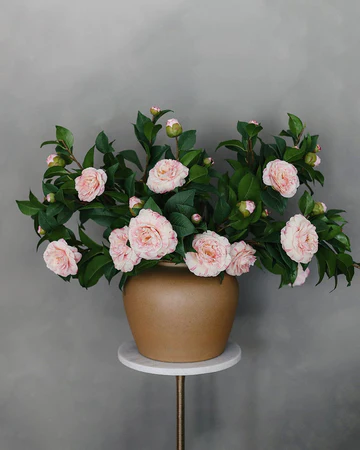
Camellias need bright indirect light or partial shade.
Best Light Conditions:
- Morning sunlight
- Afternoon shade
- Filtered sunlight under trees
- Avoid harsh midday heat
Direct strong sunlight can burn leaves and buds.
Too much shade reduces flowering.
4. Watering Schedule for Camellias
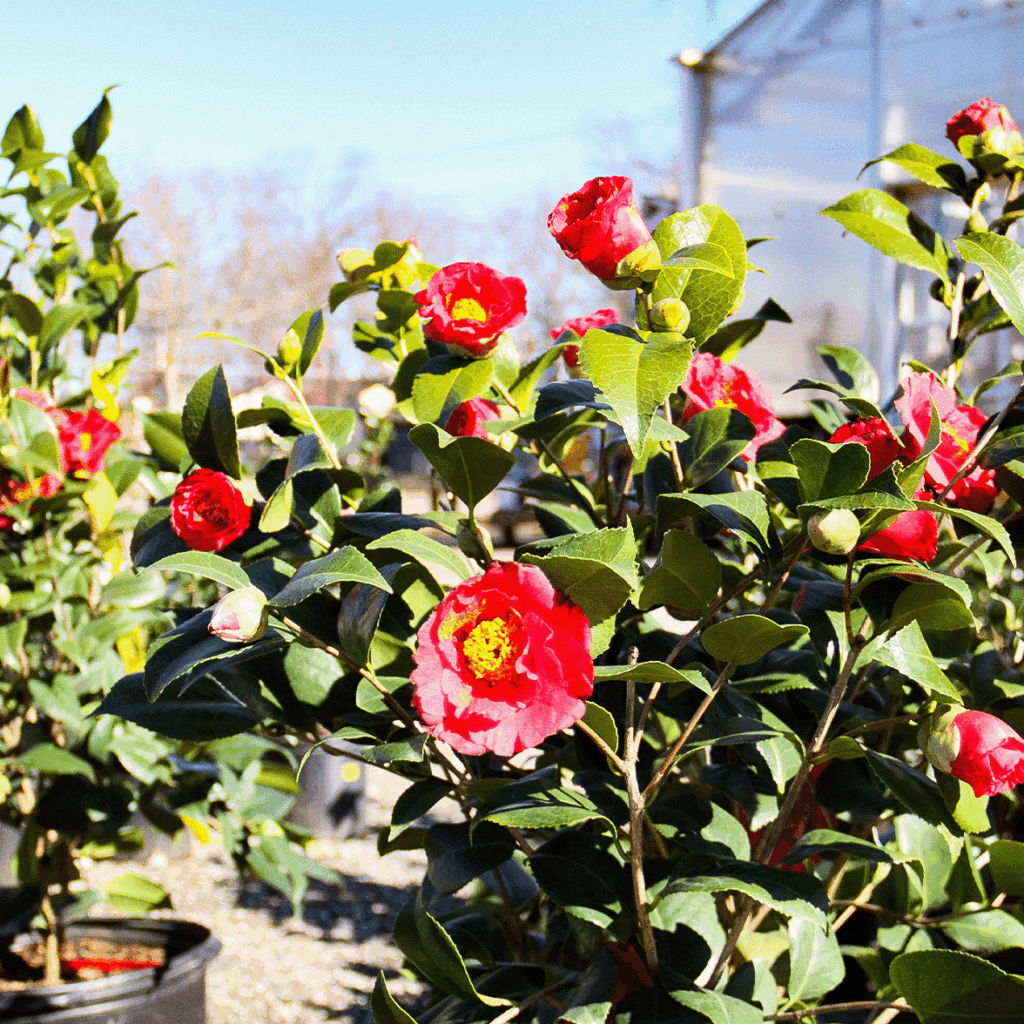
Camellias prefer consistent moisture, but never soggy soil.
Watering Rules:
- Water when the top 1–2 inches of soil feels dry.
- Deep watering once or twice a week is ideal.
- During summers, increase frequency.
- During winters, reduce watering.
- Avoid watering on the flowers (prevents spots and fungal issues).
Mulching with pine bark or dry leaves helps retain moisture and maintain soil acidity.

5. Fertilizing Camellias for Heavy Flowering
Camellias grow slowly, but they appreciate good nutrients.
Best Fertilizers:
Use any fertilizer labeled for acid-loving plants, such as:
- Azalea fertilizer
- Rhododendron fertilizer
Or use organic options:
- Cow dung compost
- Seaweed extract
- Mustard cake liquid
- Bone meal (during flowering season)
When to Fertilize:
- Early Spring – for healthy growth
- Mid-Summer – helps in forming flower buds
- Avoid fertilizing during winter blooming season
Over-fertilizing may burn the roots, so apply lightly.
6. How to Plant Camellia (Pot or Ground)
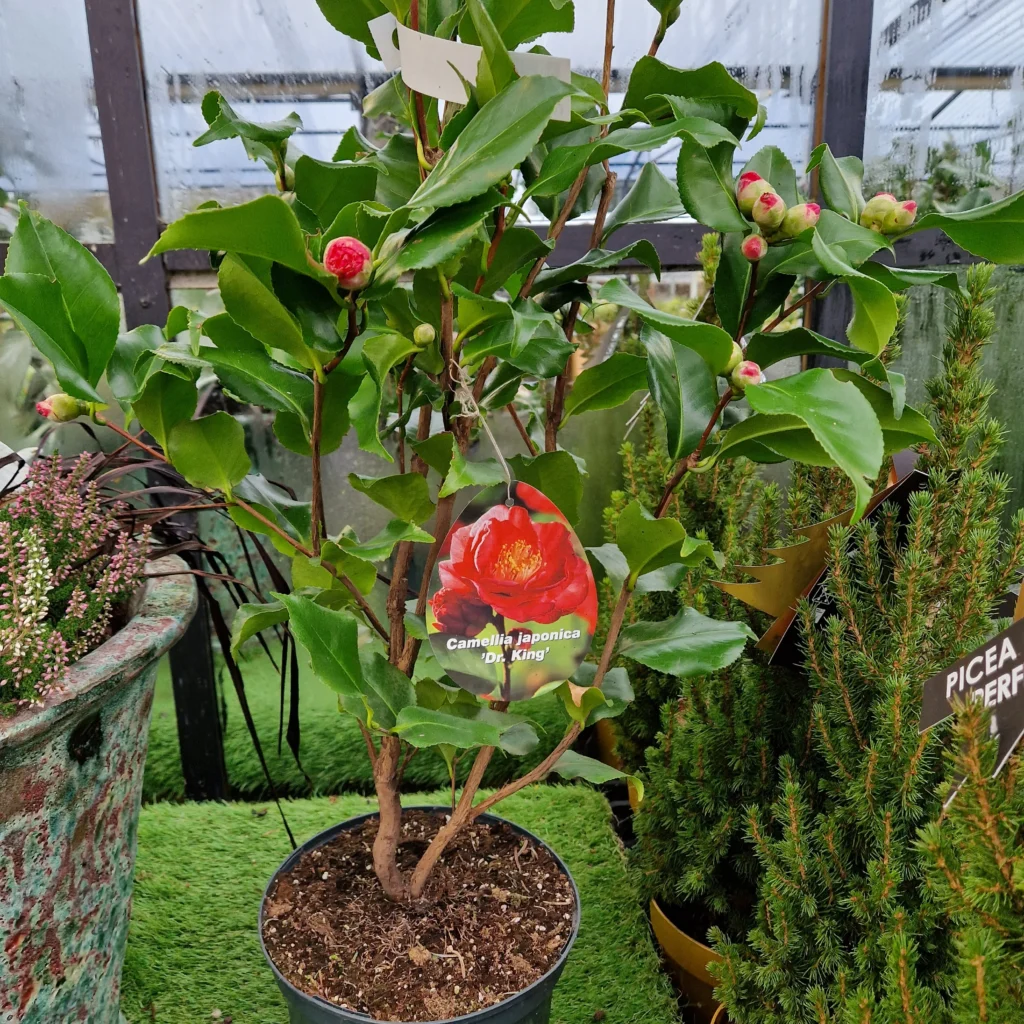
Planting in Pots
Choose:
- Minimum 14–16 inch pot for young plant
- For mature plants, use 18–20 inch deep pot
Steps:
- Fill pot with acidic soil mix.
- Place the plant at the same depth as it was in the nursery pot.
- Do NOT bury the stem too deep.
- Water thoroughly.
- Keep in semi-shade for 2–3 weeks.
Planting in the Ground
- Dig a hole twice as wide as the root ball.
- Place plant slightly above soil level.
- Backfill with acidic soil mix.
- Mulch well to protect roots.
7. Pruning Camellias the Right Way
Camellias do not need much pruning, but light trimming improves shape and flowering.

Best Time to Prune:
Immediately after flowering season ends.
What to Prune:
- Dead branches
- Weak, thin shoots
- Crossing branches
- Excess branches to improve air circulation
Never prune in late summer or fall — it removes flower buds for next season.
8. Common Problems & Solutions
Camellias are generally hardy, but they may face a few issues:
Yellow Leaves
Cause:
- High soil pH
- Overwatering
Fix:
- Add sulfur or acidic fertilizer
- Improve drainage
Bud Drop
Cause:
- Underwatering
- Sudden temperature change
- Too much sun
Fix:

- Maintain consistent moisture
- Give partial shade
Pests
Aphids, mites, scales can appear.
Fix:
- Neem oil spray once a week
- Soap water spray for severe infestation
9. How to Encourage Heavy Blooming
Here are expert tips to help your camellia bloom abundantly:
Use acidic soil mix
Provide morning sun + afternoon shade
Water regularly but avoid overwatering
Fertilize lightly during summer
Protect buds from strong heat
Prune immediately after flowering
Camellias take time to establish, but once settled, they bloom heavily every year.
10. Winter Care for Camellias
Camellias bloom in cold weather but still need protection.
Tips:
- Mulch heavily around plant base
- Avoid freezing winds
- Move potted plants under shade or greenhouse
- Water sparingly in winter
Do NOT keep camellias near heaters or warm walls.
11. Can Camellias Be Grown Indoors?
Yes — but only if you can provide:
- Cool temperature
- Bright indirect light
- Good humidity
- Slightly acidic soil
Indoor camellias need more care than outdoor ones.
12. Conclusion: A Timeless Beauty for Every Garden
Camellias are not just plants—they’re living artwork. Their glossy leaves, vibrant winter blooms, and long lifespan make them a treasure in any home garden. With the right care—acidic soil, partial shade, consistent watering, and seasonal trimming—your camellia will reward you with spectacular flowers year after year.
Whether you grow it in a pot, garden bed, or as a hedge, a camellia plant adds unbeatable charm and elegance to your home.

Leave A Comment