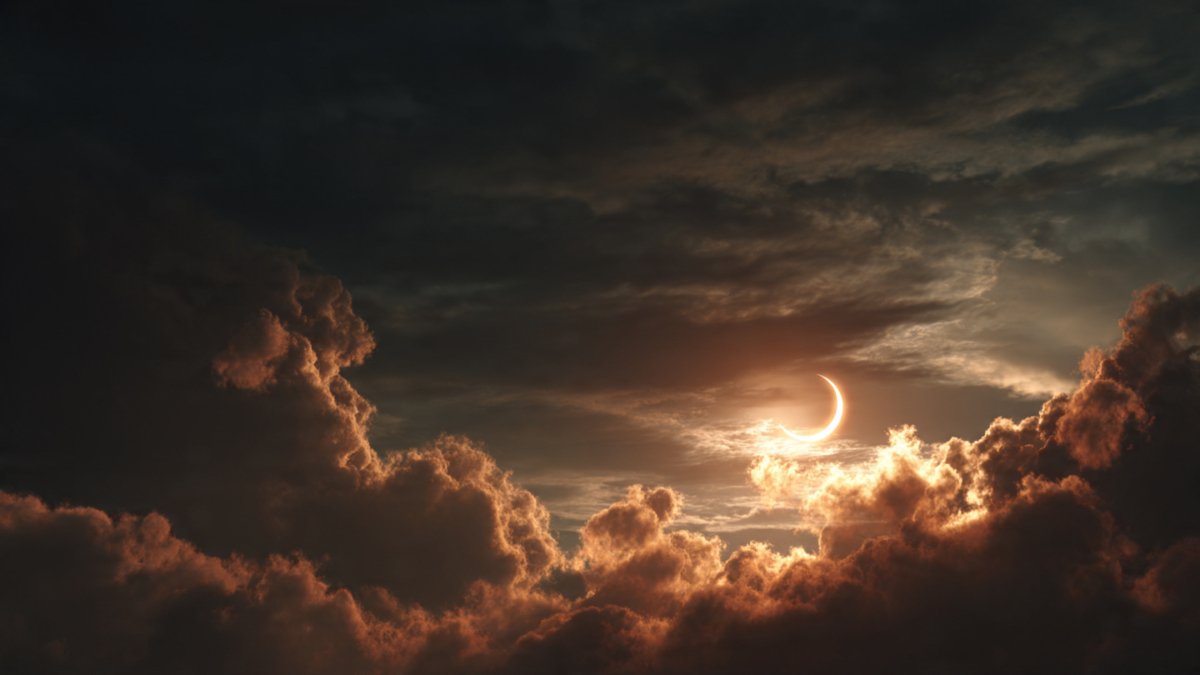
Few natural events can match the wonder and mystery of a total solar eclipse. For a brief and unforgettable moment, daylight fades, temperatures drop, birds fall silent, and the sky transforms into a twilight scene. The Sun, the source of all life on Earth, disappears behind the Moon, leaving only a glowing halo in the sky. In the coming years, one extraordinary eclipse is expected to stand out from all others: the longest total solar eclipse of the century, an event that will turn day into night and capture the attention of millions around the world.
This rare celestial phenomenon is not just a beautiful spectacle. It is also a powerful reminder of the precise balance of the universe and an opportunity for scientists, educators, and skywatchers to explore the wonders of space. As anticipation grows, people are preparing to witness a moment that may never be repeated in their lifetime.
Understanding What a Total Solar Eclipse Is
A total solar eclipse occurs when the Moon passes directly between the Earth and the Sun, completely blocking the Sun’s bright surface. This alignment happens only during a new moon, when the Moon is positioned on the same side of the Earth as the Sun.
Although the Sun is about 400 times larger than the Moon, it is also about 400 times farther away from Earth. This remarkable coincidence allows the Moon to cover the Sun almost perfectly during an eclipse. When this happens, the Sun’s outer atmosphere, called the corona, becomes visible as a soft, glowing ring around the darkened Moon.
Not every eclipse is total. Some are partial, where only part of the Sun is covered. Others are annular, where the Moon is too far away to fully block the Sun, leaving a bright “ring of fire.” A total solar eclipse, however, is the most dramatic and scientifically valuable type.
Why This Eclipse Is Called the Longest of the Century
The length of totality—the period when the Sun is completely covered—varies from one eclipse to another. Most total eclipses last between two and three minutes. Some are even shorter, lasting less than a minute.
The longest total solar eclipse of the century is special because totality will last for more than seven minutes in certain locations. This is extremely rare. Such long eclipses happen only when several conditions are perfectly aligned.
First, the Moon must be at or near its closest point to Earth, known as perigee. When the Moon is closer, it appears slightly larger in the sky, making it easier to cover the Sun completely.

Second, the Earth must be near its farthest point from the Sun, called aphelion. At this distance, the Sun appears slightly smaller, increasing the chances of a longer eclipse.
Third, the path of the Moon’s shadow must pass close to Earth’s equator, where the planet’s surface moves fastest due to rotation. This allows the shadow to remain over one location for a longer time.
When all these factors come together, the result is an exceptionally long and powerful eclipse.
How Day Turns Into Night
One of the most astonishing aspects of a total solar eclipse is how quickly daylight disappears. In the minutes leading up to totality, the sky gradually dims, similar to the approach of a storm. Shadows become sharper, and the light takes on an unusual silvery tone.
As the Moon covers more of the Sun, temperatures begin to drop. The air feels cooler, and a strange calm often settles over the environment. Animals and birds may become confused, behaving as if evening has arrived.
When totality begins, darkness falls suddenly. Stars and planets become visible in the daytime sky. The horizon glows with a soft orange and pink light, resembling sunset in all directions at once. For a few minutes, the world seems to pause.
This transformation from day to night and back again happens in less than ten minutes, making it one of the most dramatic natural experiences on Earth.
The Path of Totality
A total solar eclipse is visible only within a narrow band on Earth’s surface called the path of totality. This path is usually between 100 and 200 kilometers wide and stretches thousands of kilometers across continents and oceans.

People who are inside this path will experience complete darkness and see the Sun’s corona. Those outside it will see only a partial eclipse, which is impressive but lacks the full impact of totality.
For the longest eclipse of the century, the path of totality is expected to pass over parts of Africa, the Middle East, and Asia, before continuing across oceans. Several countries will have the opportunity to witness extended periods of darkness during the day.
Because of this limited path, many travelers plan special trips to be in the right place at the right time.
Scientific Importance of Long Eclipses
While eclipses are beautiful, they are also valuable scientific events.
During totality, the Sun’s corona becomes visible without the need for special instruments. This allows scientists to study its structure, temperature, and behavior. The corona plays a key role in solar storms and space weather, which can affect satellites, power grids, and communication systems on Earth.
Longer eclipses provide more time for observation and data collection. Researchers can conduct experiments, take high-quality images, and analyze changes in the atmosphere and ionosphere.
Eclipses have also played a major role in scientific history. In 1919, observations during a solar eclipse helped confirm Albert Einstein’s theory of relativity by showing how gravity bends light.
Even today, eclipses continue to contribute to our understanding of the Sun and its influence on our planet.

Cultural and Historical Significance
Throughout history, solar eclipses have inspired fear, wonder, and imagination. Ancient civilizations often viewed them as signs from the gods or warnings of disaster. Some believed that dragons or spirits were swallowing the Sun.
In many cultures, special rituals and prayers were performed during eclipses. In others, people stayed indoors, fearing bad luck.
Today, science has replaced superstition with understanding. Yet, the emotional impact remains strong. Seeing the Sun disappear still fills people with awe and humility.
For many, witnessing a total solar eclipse becomes a life-changing experience, remembered forever.
How to Watch Safely
Looking directly at the Sun without protection can cause serious and permanent eye damage. Even during a partial eclipse, the Sun’s rays are strong enough to harm the eyes.
Special eclipse glasses with certified filters must be used when viewing the Sun before and after totality. Regular sunglasses are not safe.
During the brief period of totality, when the Sun is completely covered, it is safe to look with the naked eye. However, as soon as the bright edge of the Sun reappears, protective glasses must be worn again.
Cameras, telescopes, and binoculars also require special filters to prevent damage.

Safety is essential to ensure that the experience remains joyful and memorable.
Preparing for the Big Day
Millions of people are expected to travel to view the longest eclipse of the century. Hotels, transportation, and viewing sites may become crowded.
Planning ahead is important. Choosing a location with clear weather, open skies, and minimal light pollution increases the chances of a good view. Learning the exact timing of totality helps viewers make the most of the moment.
Many schools, universities, and science organizations are also preparing educational programs and live broadcasts for those who cannot travel.
Whether watched in person or online, the event will unite people across the world in shared wonder.
The Emotional Power of an Eclipse
Those who have seen a total solar eclipse often describe it as deeply moving. Some feel a sense of connection to nature and the universe. Others experience a quiet moment of reflection.
The sudden darkness, the strange colors of the sky, and the glowing corona create an atmosphere that feels almost unreal. For a few minutes, everyday worries seem to disappear.
This emotional impact is one reason why people are willing to travel great distances to witness an eclipse.

Conclusion
The longest total solar eclipse of the century promises to be one of the most remarkable natural events of our time. As day turns into night and the Sun hides behind the Moon, millions will witness a rare display of cosmic precision and beauty.
Beyond its visual drama, the eclipse offers scientific insights, cultural meaning, and a powerful emotional experience. It reminds us of our place in a vast universe where planets, stars, and gravity work together in perfect harmony.
For those lucky enough to stand in the path of totality, this event will be more than just a spectacle. It will be a once-in-a-lifetime moment—one that turns an ordinary day into an unforgettable night.

Leave A Comment