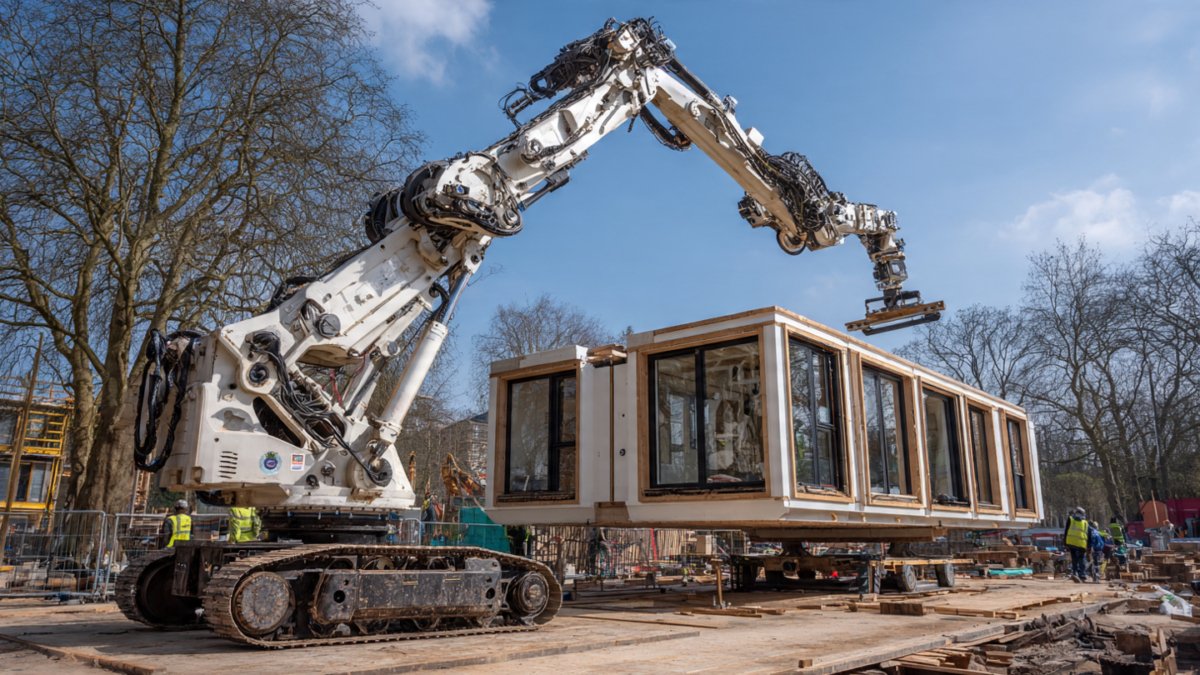
The construction industry is on the verge of a revolution. Imagine a world where a spacious, fully structured 200 m² home can be erected in just 24 hours. This is no longer science fiction—advancements in robotic construction technology have made it a reality. With automated machines taking over labor-intensive tasks, the potential to transform housing, reduce costs, and address global shortages has never been greater.
This breakthrough combines precision engineering, artificial intelligence, and innovative building materials to create homes faster, safer, and more efficiently than ever before. The implications are enormous, from alleviating urban housing crises to reshaping the way communities are built worldwide.
The Technology Behind Robotic Construction
Robotic construction involves machines that can autonomously assemble building components. Unlike traditional construction methods, which rely heavily on manual labor, robots use advanced sensors, AI algorithms, and 3D printing techniques to construct homes with minimal human intervention.
One of the most significant innovations is the development of large-scale 3D printing robots. These machines extrude concrete or specialized composite materials layer by layer, gradually forming walls, structural elements, and even decorative finishes. The technology allows precise measurements, ensuring uniformity and structural integrity that surpass human capability.
Other robotic systems handle tasks such as bricklaying, steel frame assembly, and roofing. Drones equipped with scanners can survey construction sites in real-time, ensuring the building process remains accurate and efficient. Integrated AI software monitors the workflow, coordinates multiple machines, and makes on-the-fly adjustments, reducing errors and waste.

How a 200 m² Home Can Be Built in 24 Hours
Traditionally, constructing a 200 m² home takes several months, depending on labor availability, weather conditions, and supply chains. Robotic construction drastically reduces this timeline.
The process begins with digital design models created using Building Information Modeling (BIM). Every detail of the home, from structural walls to plumbing channels, is pre-programmed into the robot’s software. Once on-site, the robot begins assembling the foundation, walls, and roof in a continuous sequence.
Using rapid-setting concrete or composite materials, the robot prints layers efficiently, forming a stable structure within hours. Mechanical arms and automated cranes handle heavy components, including prefabricated modules, beams, and roof trusses. Within 24 hours, the shell of the house is complete, including walls, roofing, and openings for windows and doors.
Final steps, such as installing electrical conduits, plumbing, and interior finishing, can also be integrated into the robotic workflow. While human oversight is still necessary for inspections and quality assurance, the bulk of labor-intensive construction is performed by machines.
Advantages Over Traditional Construction
- Speed: Reducing construction time from months to just one day revolutionizes housing delivery, especially in disaster-hit regions or areas with urgent housing needs.
- Cost Efficiency: Labor represents a significant portion of construction costs. Robots can complete tasks without fatigue, reducing wages, overtime, and human error. Material waste is minimized due to precise measurements.
- Safety: Construction is one of the most dangerous industries, with frequent injuries and fatalities. Robots reduce the need for humans to work at heights, handle heavy materials, or operate dangerous machinery.
- Quality and Precision: Automated machines follow programmed instructions exactly, resulting in uniform construction quality. Imperfections such as uneven walls, misaligned beams, or structural weaknesses are minimized.
- Sustainability: Robotic construction enables optimized material usage and integration of eco-friendly materials, reducing the carbon footprint of building projects.
Addressing the Global Housing Crisis
The world is facing a growing housing shortage. According to the United Nations, over 1.6 billion people live in inadequate housing conditions. Rapid urbanization and population growth in cities worldwide exacerbate the problem, leaving millions without affordable homes.

Robotic construction offers a solution. By drastically reducing build time and costs, these technologies make it feasible to produce large numbers of homes quickly. Governments and developers could deploy robotic systems to construct entire neighborhoods in record time, providing safe, affordable housing to those who need it most.
Moreover, the technology can be adapted for emergency housing. After natural disasters such as earthquakes, hurricanes, or floods, robotic construction could provide temporary or permanent shelters in days rather than months, saving lives and resources.
Customization and Design Flexibility
A common misconception about robotic construction is that it limits design creativity. In reality, robots can replicate complex architectural designs with extreme accuracy. Intricate facades, curved walls, and customized layouts can be pre-programmed and executed consistently.
3D printing robots, in particular, offer flexibility that traditional construction methods cannot match. Homeowners could select unique floor plans, structural features, and even artistic wall textures. This capability opens new possibilities for personalized housing while still benefiting from speed and efficiency.
Potential Challenges
While robotic construction holds enormous promise, several challenges must be addressed:

- Initial Investment: Purchasing and maintaining robotic systems involves substantial upfront costs. However, long-term savings on labor and materials often offset the initial expenditure.
- Regulatory Approvals: Building codes and safety standards vary by country. Robotic construction must be carefully adapted to meet local regulations and certifications.
- Workforce Transition: Automation could reduce traditional construction jobs. Reskilling workers for roles in robotic operation, programming, and maintenance will be essential.
- Material Limitations: Certain traditional materials, such as natural stone or heavy timber, may be difficult to integrate into fully automated processes. Research into new composite and sustainable materials is ongoing.
Global Applications and Early Success Stories
Several countries are already experimenting with robotic construction at scale. In China, large 3D-printing robots have produced multi-story apartment buildings within weeks. In Europe, prefabricated modular homes are being assembled by robotic systems, reducing construction time and costs by up to 50%.
In the United States, start-ups are deploying robots to construct affordable housing communities, targeting low-income neighborhoods and underserved populations. These projects demonstrate that rapid, automated home construction is not only feasible but scalable.
The Future of Housing
The integration of robotics in construction is only the beginning. Experts predict that within the next decade, robotic construction could become mainstream, reshaping cities and communities worldwide. Homes could be mass-produced with unprecedented efficiency, freeing human workers to focus on creative, supervisory, and specialized roles.
Beyond individual homes, robotic systems could construct schools, hospitals, and commercial buildings at previously unimaginable speeds. Smart integration with AI-driven design software could optimize building layouts, energy efficiency, and environmental sustainability.
Social and Economic Impacts
Faster, cheaper construction will have profound social and economic consequences:

- Affordable Housing: Lower costs could make homeownership accessible to more people, reducing inequality.
- Disaster Relief: Rapid deployment of shelters could save lives and accelerate recovery.
- Urban Development: Cities could expand infrastructure quickly while maintaining high standards of quality.
- Job Evolution: While some traditional roles may decline, opportunities in robotics, AI programming, and advanced construction management will grow.
The benefits extend to environmental sustainability as well. Optimized material use, reduced construction waste, and energy-efficient designs could help mitigate the environmental impact of traditional building practices.
Conclusion
The ability to build a 200 m² home in just 24 hours represents a landmark achievement in construction technology. Robotic construction combines speed, efficiency, precision, and flexibility, offering a solution to some of the world’s most pressing housing challenges.
While challenges remain, including regulatory hurdles and workforce adaptation, the potential benefits are transformative. Faster construction, lower costs, and higher-quality homes could revolutionize urban planning, disaster recovery, and housing accessibility.
As robots take on the labor-intensive tasks of construction, humans can focus on innovation, design, and community development. This breakthrough is more than a technological feat—it is a pathway to a future where safe, affordable, and personalized homes are available to everyone.
In the coming years, robotic construction could redefine the very concept of building, proving that with innovation and ingenuity, we can meet the world’s housing needs—and do so faster, smarter, and more sustainably than ever before.


Leave A Comment