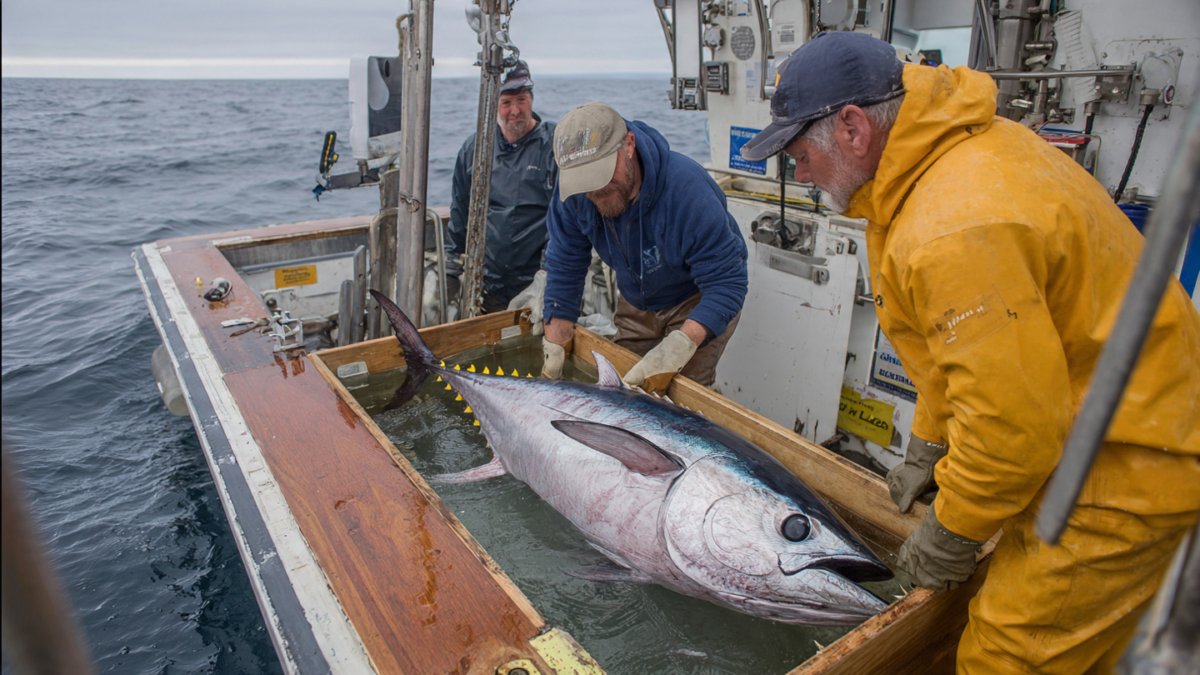
In a remarkable event that has captured the attention of marine scientists and conservationists worldwide, a rare giant bluefin tuna has recently been measured and officially confirmed by marine biologists using strict, peer-reviewed scientific protocols. This discovery not only highlights the extraordinary size and resilience of this iconic species but also reinforces the importance of standardized research methods in protecting marine biodiversity.
Bluefin tuna are among the most powerful and valuable fish in the ocean. Known for their speed, endurance, and migratory abilities, they can travel thousands of kilometers across oceans. However, decades of overfishing, illegal harvesting, and environmental changes have severely reduced their populations. As a result, sightings and documented measurements of exceptionally large bluefin tuna have become increasingly rare. This recent confirmation represents a significant scientific and ecological milestone.
The Significance of Bluefin Tuna
Bluefin tuna belong to the genus Thunnus and include three main species: Atlantic bluefin (Thunnus thynnus), Pacific bluefin (Thunnus orientalis), and Southern bluefin (Thunnus maccoyii). Among these, the Atlantic bluefin is considered the largest and most powerful.
Adult bluefin tuna can reach lengths of over four meters and weigh more than 600 kilograms. Their streamlined bodies, strong muscles, and ability to regulate body temperature allow them to swim at speeds exceeding 70 kilometers per hour. These adaptations make them elite predators in the marine ecosystem.
Beyond their biological importance, bluefin tuna are economically valuable, particularly in the global sushi and sashimi markets. Individual specimens have sold for millions of dollars at auction. Unfortunately, this high demand has contributed significantly to population decline, making scientific monitoring more critical than ever.
Discovery of the Giant Specimen
The confirmed giant bluefin tuna was first reported by a group of commercial fishers operating in deep offshore waters. Upon hauling in their catch, they noticed that one specimen was unusually large, far exceeding the average size typically recorded. Recognizing its potential scientific value, the crew contacted local marine research authorities instead of immediately selling the fish.
Marine biologists from a nearby research institute responded promptly. The specimen was carefully preserved and transported to a designated marine laboratory facility, where controlled measurements and analyses could be conducted without compromising data accuracy.

This responsible action by the fishing crew played a crucial role in allowing scientists to document the specimen properly. Such cooperation between fishers and researchers is increasingly encouraged in modern conservation efforts.
Importance of Peer-Reviewed Protocols
Scientific credibility depends heavily on standardized and transparent methods. In this case, marine biologists followed internationally recognized, peer-reviewed protocols to measure and verify the tuna’s size, age, and condition.
Peer-reviewed protocols are procedures that have been evaluated and approved by independent experts in the field. These methods ensure that results are reliable, repeatable, and free from personal bias. By adhering to such protocols, researchers can confidently share their findings with the global scientific community.
For large marine species like bluefin tuna, inaccurate measurements can lead to exaggerated claims, misinformation, and flawed conservation strategies. Therefore, strict adherence to validated methods is essential.
Measurement Procedures
The research team followed a multi-step process to ensure precision and transparency.
First, the tuna was placed on a calibrated measuring platform specifically designed for large marine animals. The total length was measured from the tip of the snout to the end of the caudal fin using reinforced measuring tapes and laser alignment tools. Fork length and standard length were also recorded to meet international reporting standards.
Next, the specimen was weighed using industrial-grade digital scales capable of handling several tons. The scales had been recently calibrated and certified to minimize margin of error. Multiple readings were taken and averaged to confirm accuracy.

High-resolution photographs and video recordings were made from several angles. These visual records serve as permanent documentation and allow independent researchers to verify the data if needed.
Biological Analysis
Beyond basic measurements, scientists conducted detailed biological examinations. Tissue samples were collected for genetic testing to confirm the species and determine population origin. This analysis helps researchers understand migration patterns and breeding grounds.
Otoliths, small bone-like structures in the fish’s inner ear, were extracted to estimate age. These structures form annual growth rings similar to tree rings. By analyzing them under a microscope, scientists determined that the tuna was several decades old, indicating exceptional survival in a challenging environment.
Fat content, muscle structure, and organ condition were also examined to assess overall health. Surprisingly, the specimen showed signs of excellent physical condition, suggesting that it had access to abundant food and favorable environmental conditions throughout its life.
Verification and Peer Review
Once data collection was complete, the research team compiled their findings into a detailed scientific report. This report included raw measurements, calibration certificates, photographic evidence, and statistical analyses.
The report was then submitted to a reputable marine biology journal for peer review. Independent experts evaluated the methodology, data integrity, and conclusions. They examined whether protocols were properly followed and whether any inconsistencies existed.
After several rounds of review and minor revisions, the study was approved and published. This formal process officially confirmed the specimen as one of the largest scientifically documented bluefin tuna in recent history.

Implications for Marine Science
The confirmation of this giant bluefin tuna carries several important implications.
First, it demonstrates that despite population declines, some individuals are still capable of reaching exceptional sizes. This suggests that under the right conditions, bluefin tuna can thrive and reproduce successfully.
Second, the discovery provides valuable data for population models. Large, old individuals play a crucial role in reproduction because they produce more eggs and contribute to genetic diversity. Understanding their presence helps scientists estimate stock health more accurately.
Third, the event highlights the effectiveness of collaborative research involving fishers, scientists, and regulatory bodies. Such partnerships are essential for gathering reliable data in vast and complex ocean environments.
Conservation and Management Impact
Bluefin tuna are currently managed through international agreements involving fishing quotas, seasonal restrictions, and monitoring programs. However, enforcement remains challenging in many regions.
This confirmed specimen strengthens arguments for continued and enhanced conservation efforts. It serves as evidence that protection measures can yield positive results when properly implemented.
Marine policymakers can use this data to refine catch limits and habitat protection strategies. Protecting spawning grounds and migratory routes becomes even more critical when rare, mature individuals are documented.

Public awareness also benefits from such discoveries. When people learn about the existence of these magnificent creatures, they are more likely to support sustainable seafood practices and marine conservation initiatives.
Role of Technology in Modern Research
Advanced technology played a vital role in this confirmation. Digital measurement tools, genetic sequencing equipment, satellite databases, and high-resolution imaging all contributed to accurate documentation.
Modern data-sharing platforms allow researchers worldwide to access and analyze findings in real time. This global collaboration accelerates scientific progress and improves conservation outcomes.
Artificial intelligence and machine learning are also beginning to assist in identifying patterns in tuna migration and population changes. The data from this specimen will likely be incorporated into future predictive models.
Challenges in Studying Giant Marine Species
Despite technological advances, studying large marine animals remains difficult. Oceans cover more than 70 percent of the Earth’s surface, and many regions are inaccessible.
Bluefin tuna spend much of their lives in deep, open waters, making direct observation rare. Researchers often rely on tagging programs, satellite tracking, and cooperative reporting by fishers.
Additionally, financial and logistical constraints limit the number of comprehensive studies that can be conducted. Each confirmed specimen requires significant resources, time, and expertise.

Looking Toward the Future
The confirmation of this rare giant bluefin tuna represents more than a scientific achievement. It symbolizes hope for marine conservation and the power of evidence-based research.
As climate change, pollution, and overfishing continue to threaten ocean ecosystems, rigorous scientific documentation becomes increasingly important. Peer-reviewed protocols ensure that decisions are based on facts rather than speculation.
Future research will likely focus on identifying environmental factors that allowed this tuna to reach such extraordinary size. Understanding these conditions could help replicate success across other populations.
Conclusion
The measurement and confirmation of a rare giant bluefin tuna using peer-reviewed protocols stand as a testament to modern marine science’s dedication to accuracy, transparency, and conservation. Through careful collaboration, advanced technology, and strict adherence to scientific standards, researchers have documented a remarkable specimen that enriches our understanding of ocean life.
This achievement reminds us that even in an era of environmental uncertainty, nature still holds extraordinary wonders. By supporting responsible fishing practices, scientific research, and international cooperation, humanity can help ensure that future generations will continue to witness the power and beauty of giants like the bluefin tuna in our oceans.

Leave A Comment