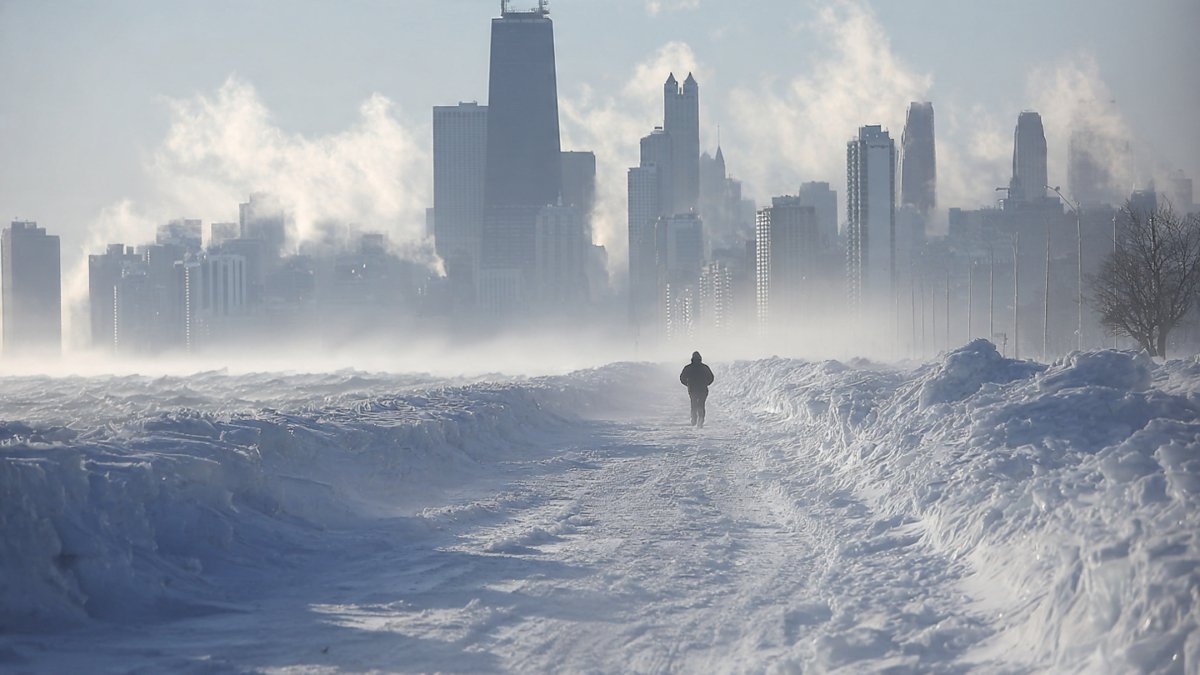
Meteorologists across the world are closely monitoring a powerful and unusual atmospheric event unfolding in the Northern Hemisphere. A rare early-season polar vortex shift is developing, and experts warn that its strength and timing are almost unprecedented for February. This phenomenon has the potential to reshape weather patterns across vast regions, bringing extreme cold, heavy snowfall, and sudden temperature swings to millions of people.
While polar vortex disturbances are not entirely uncommon, the current situation stands out because of its early arrival, rapid intensification, and wide-reaching influence. Scientists believe it could mark one of the most significant winter weather events in recent years.
Understanding the Polar Vortex
The polar vortex is a massive area of low pressure and cold air that circulates around the Earth’s poles in the stratosphere and upper troposphere. During winter, it becomes stronger and more organized, trapping frigid Arctic air near the North Pole.
When the vortex remains stable, cold air stays mostly confined to polar regions. However, when it weakens, stretches, or shifts, large portions of this icy air can spill southward into mid-latitude regions, causing sharp drops in temperature and severe winter storms.
These disruptions are often linked to sudden stratospheric warming events, changes in jet stream patterns, and interactions with large-scale climate systems. The current shift appears to involve several of these factors at once, making it especially complex.
Why This February Shift Is So Unusual
February typically marks the later stages of winter in the Northern Hemisphere. By this time, the polar vortex usually begins to stabilize or gradually weaken as spring approaches. Major disruptions are more common in December or January, when temperature contrasts between the Arctic and lower latitudes are strongest.
This year, however, atmospheric data shows a rapid weakening and displacement of the vortex much earlier than expected. Upper-level temperature readings indicate a dramatic warming in the stratosphere above the Arctic, causing the vortex to stretch and split.

Experts describe this event as “nearly unprecedented” because of its intensity and timing. In some regions, stratospheric temperatures have risen by more than 40 degrees Celsius within a few days, a change rarely observed in February.
Such an abrupt shift increases the likelihood of extreme weather outbreaks, as cold air masses are pushed far beyond their usual boundaries.
The Role of Sudden Stratospheric Warming
At the heart of this phenomenon lies a powerful sudden stratospheric warming event. This occurs when planetary-scale waves in the atmosphere disrupt the normal west-to-east flow of winds around the pole.
As these waves intensify, they force warm air upward into the stratosphere, rapidly heating the region. This warming weakens the polar vortex and can even reverse wind directions.
In the current case, satellite observations and weather balloons have detected one of the strongest warming episodes in decades for this time of year. The resulting pressure changes are causing the vortex to split into multiple smaller systems.
Each of these fragments can travel independently, increasing the risk of prolonged cold spells in different parts of the world.
Potential Impacts on North America
North America is expected to be one of the regions most affected by the vortex shift. Forecasters warn that large portions of the United States and Canada could experience repeated Arctic air intrusions over the coming weeks.

These cold outbreaks may bring temperatures 15 to 30 degrees Celsius below seasonal averages in some areas. Major cities could face dangerous wind chills, frozen infrastructure, and increased energy demand.
In addition to extreme cold, the altered jet stream pattern may lead to powerful winter storms. When cold Arctic air collides with warmer, moisture-rich air from the south, it can produce heavy snowfall, ice storms, and blizzards.
Transportation networks, power grids, and emergency services may come under significant strain as a result.
Effects on Europe and Asia
Europe is also likely to feel the consequences of this unusual polar vortex behavior. Meteorological models suggest that cold air masses could spill into Eastern and Central Europe, potentially triggering late-season snowstorms and prolonged freezing conditions.
Countries that have already begun transitioning toward spring-like weather may be caught off guard by a sudden return of winter. Agriculture, transportation, and tourism sectors could face disruptions.
In Asia, parts of Russia, China, and Central Asia may experience intensified cold waves. Northern regions could see record-low temperatures for February, while southern areas might deal with unpredictable weather swings.
These disruptions highlight the interconnected nature of the global atmosphere, where changes in one region can influence conditions thousands of kilometers away.

Implications for Energy and Infrastructure
One of the most immediate concerns associated with extreme cold outbreaks is their impact on energy systems. Heating demand typically surges during polar vortex events, placing enormous pressure on power grids and natural gas supplies.
In past winters, similar events have led to widespread blackouts, equipment failures, and fuel shortages. With this year’s vortex shift being unusually strong, utilities are preparing for potential spikes in consumption.
Infrastructure such as water pipes, roads, and railways is also vulnerable to prolonged freezing temperatures. Burst pipes, cracked pavement, and frozen switches can disrupt daily life and economic activity.
Authorities in affected regions are urging residents and businesses to take precautionary measures well in advance.
Links to Climate Change
Scientists continue to debate the relationship between polar vortex disruptions and climate change. While no single event can be directly attributed to global warming, many researchers believe that Arctic warming plays a role in destabilizing atmospheric patterns.
The Arctic is warming at more than twice the global average rate, reducing the temperature difference between polar and mid-latitude regions. This weaker contrast can slow and destabilize the jet stream, making it more prone to large waves and sudden shifts.
Some studies suggest that these changes may increase the frequency and intensity of polar vortex disruptions. Others argue that natural variability still dominates. However, the growing number of unusual winter events has intensified scientific interest in this connection.

How Communities Can Prepare
Given the potential severity of the upcoming weather, experts emphasize the importance of preparedness. Households in vulnerable areas are advised to insulate homes, protect pipes, and ensure heating systems are in good working order.
Emergency kits containing food, water, medications, and flashlights can be crucial during power outages. Drivers should equip vehicles with winter supplies and avoid unnecessary travel during severe storms.
Local governments and emergency agencies are also coordinating response plans, ensuring shelters are available and communication systems remain operational.
Preparation can significantly reduce the risks associated with extreme winter conditions.
The Role of Advanced Forecasting
One positive aspect of modern meteorology is the ability to detect and analyze events like this well in advance. Satellite monitoring, high-altitude weather balloons, and powerful computer models allow scientists to track stratospheric changes in real time.
These tools have made it possible to issue early warnings and improve forecast accuracy. Although exact impacts are difficult to predict weeks ahead, the current outlook gives authorities valuable time to prepare.
Continued investment in climate and weather research will be essential for managing future extreme events.

What the Coming Weeks May Bring
As the polar vortex continues to evolve, meteorologists will be watching closely for signs of further weakening or fragmentation. The precise path of displaced cold air masses will determine which regions experience the most severe effects.
Some areas may face repeated cold waves, while others could see brief but intense outbreaks followed by milder conditions. This pattern of volatility is typical of disrupted vortex systems.
Experts caution that winter is far from over, even as daylight hours increase and spring approaches.
A Reminder of Nature’s Power
The developing early-season polar vortex shift serves as a powerful reminder of the atmosphere’s complexity and unpredictability. Despite advances in science and technology, large-scale natural systems can still produce surprises with far-reaching consequences.
For millions of people, the coming weeks may bring challenging conditions that test infrastructure, resilience, and preparedness. Yet they also highlight the importance of scientific research, international cooperation, and public awareness.
As this rare and intense event unfolds, it underscores a fundamental truth: even in an era of modern forecasting, nature remains a formidable force, capable of reshaping daily life in dramatic and unexpected ways.

Leave A Comment