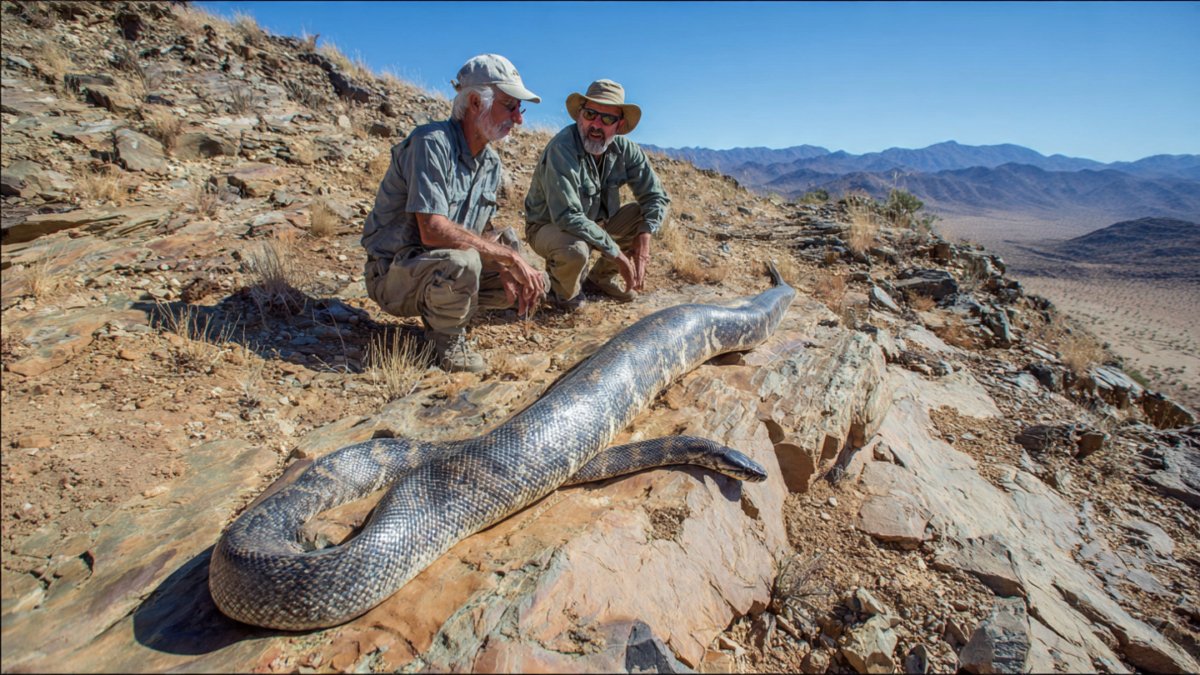
In a remarkable breakthrough for wildlife science, field biologists have confirmed the discovery of a record-breaking snake specimen during a carefully planned and controlled survey in a remote and largely unexplored region. This finding has attracted global attention from herpetologists, conservationists, and environmental researchers, as it sheds new light on the diversity, adaptability, and resilience of reptile species in extreme environments. The discovery not only highlights the importance of systematic field research but also emphasizes the need for continued conservation efforts in fragile ecosystems.
Snakes have long fascinated scientists and the public alike due to their evolutionary success and ecological importance. Found on every continent except Antarctica, these reptiles play vital roles in maintaining natural balance by controlling rodent and insect populations. Despite centuries of study, many snake species remain poorly understood, especially those inhabiting remote landscapes. The confirmation of a record-breaking specimen demonstrates that significant biological discoveries are still possible in the modern era.
Background of the Survey Expedition
The discovery took place during a multi-year biodiversity assessment conducted by an international team of field biologists and environmental specialists. The survey aimed to document reptile, amphibian, and small mammal populations in an isolated mountainous region characterized by dense vegetation, rocky outcrops, and limited human access.
Before entering the field, researchers spent months planning logistics, safety protocols, and research objectives. Satellite mapping, climate data analysis, and previous ecological reports were used to identify promising survey zones. Due to the region’s challenging terrain and unpredictable weather, the team underwent specialized training in wilderness survival, first aid, and wildlife handling.
The expedition was supported by academic institutions, conservation organizations, and local authorities. Their shared goal was to establish a reliable baseline dataset that could be used to monitor long-term environmental changes in the area.
Conditions in the Remote Terrain
The survey region was located far from major settlements and lacked permanent infrastructure. Access required several days of travel by off-road vehicles, followed by long treks on foot through steep valleys and thick forest cover. Researchers carried essential equipment, food supplies, and scientific instruments in heavy backpacks.
Temperatures fluctuated dramatically between day and night, creating additional challenges. During the day, intense sunlight and high humidity tested physical endurance, while nighttime temperatures dropped sharply, increasing the risk of hypothermia. Seasonal rainfall frequently triggered landslides and flooded pathways, making navigation hazardous.

Despite these difficulties, the isolation of the region made it an ideal location for biodiversity research. Limited human disturbance had allowed native species to thrive, creating conditions where rare and unusually large specimens could develop.
Discovery of the Record-Breaking Snake
The record-breaking snake was encountered during a routine nocturnal survey, a standard method used to locate reptiles that are more active after sunset. Using headlamps and thermal imaging devices, researchers slowly moved along a forested ridge near a freshwater stream.
One team member noticed an unusually large movement among low branches and leaf litter. Upon closer inspection, they observed a massive snake coiled near the water’s edge. Its size, coloration, and body thickness immediately distinguished it from other known specimens in the region.
Following established safety procedures, the team maintained a safe distance and alerted the project leader. A temporary observation zone was established to prevent disturbance, while specialists prepared to document the animal.
Controlled Documentation and Measurement
Accurate documentation was essential to verify the specimen’s exceptional status. The team followed standardized protocols developed by international herpetological associations to ensure reliable data collection.
First, the snake’s behavior and posture were observed for several minutes to assess stress levels and potential aggression. Once it appeared calm, trained handlers carefully guided it into a transparent, ventilated containment tube designed for large reptiles. This method minimized risk to both the animal and the researchers.
The snake’s total length was measured using flexible, non-stretch measuring tapes aligned along its body curve. Multiple measurements were taken by different team members to reduce human error. Body girth was recorded at several points, and overall mass was estimated using portable digital scales.

High-resolution photographs and video recordings captured distinctive scale patterns, coloration, and head structure. These images were later used for species confirmation and independent verification by external experts.
Species Identification and Genetic Testing
Preliminary observations suggested that the snake belonged to a well-known but rarely studied species recognized for its potential to reach impressive sizes. However, visual identification alone was insufficient for scientific confirmation.
Small, non-invasive tissue samples were collected from shed skin fragments found nearby and from a tiny scale clipping performed under sterile conditions. These samples were preserved and transported to a molecular biology laboratory.
DNA sequencing confirmed the specimen’s taxonomic identity and revealed genetic markers associated with long-term isolation and low human interference. The results indicated that this population had evolved under unique environmental conditions, potentially contributing to the specimen’s extraordinary growth.
Verification Through Peer Review
After completing fieldwork, the research team compiled their findings into a comprehensive scientific report. The document included detailed measurements, environmental data, photographic records, genetic analyses, and methodological explanations.
The report was submitted to a respected peer-reviewed journal specializing in herpetology and biodiversity studies. Independent reviewers examined the data for consistency, accuracy, and adherence to ethical standards.
Several revisions were requested, primarily related to statistical analysis and comparative data. After addressing these concerns, the study was approved and published, officially recognizing the snake as one of the largest verified specimens of its species.

Ecological Significance of the Discovery
The confirmation of this record-breaking snake has important implications for ecological research. Large individuals often play crucial roles within their ecosystems, acting as apex or near-apex predators that regulate prey populations.
By controlling rodents and small mammals, such snakes help prevent crop damage, disease spread, and habitat degradation. Their presence indicates a healthy and balanced food web, reflecting favorable environmental conditions.
Furthermore, exceptionally large specimens contribute significantly to reproduction. They typically produce more offspring and pass on strong genetic traits, supporting population stability and resilience.
Conservation Implications
This discovery has strengthened calls for enhanced protection of remote and biodiverse regions. As human activities expand into previously untouched areas, habitats face increasing threats from deforestation, mining, and infrastructure development.
The presence of a record-breaking snake highlights the ecological value of preserving these landscapes. Conservation organizations are now using the findings to advocate for expanded protected areas and stricter environmental regulations.
Local communities have also become more engaged in conservation initiatives, recognizing the potential for eco-tourism and sustainable development based on wildlife protection.
Role of Technology in Field Research
Modern technology played a vital role in this successful discovery. GPS mapping allowed precise location recording, while satellite communication devices ensured team safety. Portable genetic sampling kits and advanced imaging equipment enabled real-time data collection in challenging conditions.

Data was uploaded to international biodiversity databases, allowing researchers worldwide to access and analyze the findings. This collaborative approach enhances transparency and accelerates scientific progress.
In the future, drones, artificial intelligence, and automated monitoring systems may further improve wildlife surveys, especially in inaccessible regions.
Challenges Faced by Field Biologists
Despite the success of this expedition, field research remains physically demanding and financially demanding. Researchers face risks from extreme weather, wildlife encounters, and medical emergencies far from hospitals.
Funding limitations often restrict the duration and scope of surveys, reducing opportunities for comprehensive data collection. Political instability and land-use conflicts can also hinder scientific access.
Nevertheless, dedicated field biologists continue their work driven by curiosity, responsibility, and commitment to environmental stewardship.
Looking Ahead
The discovery of this record-breaking snake serves as a powerful reminder that Earth’s biodiversity still holds many secrets. Even in an age of satellites and digital mapping, firsthand observation remains irreplaceable.
Future studies will focus on monitoring this population, understanding growth patterns, and identifying environmental factors that support exceptional development. Long-term research may reveal insights applicable to other threatened species.

Educational programs and public outreach efforts are also being developed to share this story and inspire greater appreciation for wildlife conservation.
Conclusion
The confirmation of a record-breaking snake specimen during a controlled survey in remote terrain represents a significant achievement in modern field biology. Through careful planning, ethical handling, advanced technology, and rigorous peer review, scientists have documented a remarkable example of nature’s potential.
This discovery reinforces the importance of protecting remote ecosystems and supporting scientific exploration. By valuing evidence-based research and sustainable practices, society can help ensure that extraordinary creatures like this giant snake continue to thrive in the wild for generations to come.

Leave A Comment